
Thimbleweed Park: Retro Point‑and‑Click Mystery in a Haunted Town
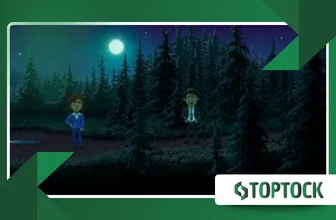
Navigating the fog-drenched streets of Thimbleweed Park feels like flipping through a dusty, long-lost noir comic that someone accidentally digitized. It is a calculated, brilliant return to a specific type of frustration and triumph that defined the late eighties.
Anúncios
Summary
- Creative DNA: How Ron Gilbert and Gary Winnick reclaimed their legacy.
- The Verb Matrix: Why the nine-verb UI still dictates the pace.
- Five Perspectives: A breakdown of the interlocking character narratives.
- Hardware Evolution: Running a “retro” engine on 2026 systems.
- Aesthetic Choices: The deliberate tension between pixels and lighting.
What is Thimbleweed Park?
At its core, the game is a neo-noir detective story wrapped in the aesthetics of a 1987 LucasArts classic. Developed by Terrible Toybox, it functions as a spiritual bridge to Maniac Mansion, though it carries a much heavier, more existential weight than its predecessors ever dared.
The setup is deceptively simple: two federal agents arrive to investigate a “pixelated corpse” rotting under a highway bridge.
However, the town itself—a decaying sprawl of neon signs and broken dreams—soon becomes the primary antagonist, dragging a cursed clown and a vengeful ghost into its mechanical maw.
Unlike modern adventures that rely on contextual clicks, this experience forces you to interact with the world through a grid of nine verbs.
Anúncios
It’s a deliberate pacing mechanism; it makes you pause, think, and truly inhabit the logic of the environment rather than just clicking everything until something happens.
How does the multi-character system work?
Managing the five protagonists is less about simple task-switching and more about orchestrating a complex, digital symphony.
Each character, from the cynical Agent Ray to the aspiring game dev Delores, possesses a specific set of tools and a unique psychological baggage that colors their interactions with the townspeople.
Progress often feels like solving a Rubik’s cube from the inside. You might need one character to distract a paranoid shopkeeper while another sneaks into a restricted area, creating a sense of synchronized espionage that linear games simply cannot replicate. It’s a rewarding layer of complexity that keeps the town feeling alive.
++ LIMBO (mobile): Atmospheric Platformer with Minimalist Horror
This character-swapping isn’t just a gimmick for puzzles; it’s the vehicle for the game’s social commentary. Seeing the same decaying factory through the eyes of a disgraced clown versus a federal agent provides a fragmented, fascinating perspective on the town’s mysterious economic collapse.
Technical Overview and Platform Availability
| Feature | Specification |
| Lead Designers | Ron Gilbert & Gary Winnick |
| Engine | Custom C++ “Retro-Modern” Engine |
| Visual Identity | Parallax-heavy 2D Pixel Art |
| Current Status | 2026 Compatibility Patch Active |
| Audio | Full Professional Voice Cast |
| Logic Flow | Casual vs. Hard (Puzzle Density) |
Why is the writing considered industry-leading?
There is something deeply unsettling about the humor here. It mocks the very genre it inhabits, yet it never feels like a parody that hates its source material.
Instead, the script uses 1990s pop culture tropes—the flickering monitors, the occult whispers, the “Big Pillow” conspiracy—to build a world that feels dangerously close to a fever dream.
The dialogue avoids the sanitized, safe feeling of modern AAA titles. Characters are often rude, obsessed with their own niche problems, and genuinely strange.
This grit makes the moments of clarity or connection feel much more earned, grounding the surreal plot in a recognizable human (or ghostly) experience.
For those interested in the structural bones of this narrative, the Thimbleweed Park Dev Blog remains one of the best resources for understanding how “moon logic” was refined into something fair and intuitive. It’s a rare look at the trial-and-error process of building a cult classic.
Which platforms support the game in 2026?
Despite being nearly a decade old, the game’s custom engine has proven remarkably resilient. On 2026 hardware, the lighting effects—shadows stretching across pixelated floorboards—look sharper than ever, benefiting from modern HDR implementations that make the neon signs of the Quickie Pal pop against the midnight sky.
The experience translates beautifully to handheld devices. There is a certain tactile satisfaction in dragging an item from your inventory to a verb on a touchscreen, bridging the gap between the old-school mouse clicks and modern mobile convenience. It feels like the game has finally found its ideal physical form.
Stability remains the silent hero here. While many contemporary titles struggle with launch-day bloat, this project runs with a lean, purposeful efficiency.
Read more: Hidden Folks: Explore Hand‑Drawn Worlds in a Search‑and‑Find Adventure
It’s a testament to building custom tools for a specific vision rather than forcing a story into a generic, one-size-fits-all engine.
What are the key differences in difficulty modes?
Choosing between Casual and Hard mode is essentially choosing between a guided tour and a survival exercise.
Hard mode is the intended experience, featuring the “Squeaking Duck” style puzzles that require lateral thinking and a bit of obsessive note-taking to overcome.
Casual mode effectively trims the fat. It removes entire puzzle chains that might feel like busywork to someone just looking to soak in the atmosphere and the biting wit of the script.
It’s a merciful inclusion, though it does sacrifice some of the satisfaction found in unraveling the town’s more obscure secrets.
++ Tiles Hop: Bounce to the Beat in a Colorful Rhythm Game
The beauty of the game is that it doesn’t judge you for your choice. Both paths lead to the same mind-bending conclusion, but the harder route forces you to look closer at the world.
You’ll find yourself memorizing the layout of the occult bookstore or the schedule of the local bus out of pure necessity.
Conclusion
Thimbleweed Park is a rare piece of media that understands its own nostalgia. It doesn’t just mimic the past; it interrogates it, using old-school mechanics to tell a story about the inevitable march of technology and the ghosts we leave behind in our code.
The town is a graveyard of ideas, and walking through it remains one of the most atmospheric experiences in the adventure genre.
It is a game that demands patience and rewards it with a narrative that sticks in your brain long after the final credits roll across the pixelated horizon.
As we look at the landscape of gaming in 2026, it’s clear that few titles have captured this specific blend of melancholy and mischief so effectively. It remains a mandatory stop for anyone who believes that a good story is worth a few difficult puzzles.
For a deeper dive into the technical evolution of the point-and-click genre, Adventure Gamers offers comprehensive archives that put this game’s impact into a broader historical context.
FAQ
Is this game too difficult for modern players?
Not necessarily. While the “Hard” mode is famous for its complexity, the game provides an in-game hint line (a literal telephone you can call) that offers subtle nudges rather than spoiling the answers outright.
Do I need to play Maniac Mansion first?
While there are dozens of references for the eagle-eyed fan, the story is entirely self-contained. You don’t need a history degree in 1980s gaming to appreciate the mystery or the character arcs.
How does the 2026 version differ from the original?
The core gameplay is identical, but the latest updates ensure high-fidelity scaling for modern 8K displays and improved cloud-syncing across various mobile and desktop ecosystems.
Is the humor dated?
Because the game was already a period piece when it was released, its jokes about 1987 technology and 1990s TV tropes have aged remarkably well, feeling like a deliberate time capsule rather than “stale” content.
++ In Thimbleweed Park, a dead body is the least of your problems
Popular Now