Idle Supermarket Tycoon: Expand Your Store and Keep Shoppers Happy
In the shifting landscape of mobile simulations, Idle Supermarket Tycoon has managed to outlast countless flash-in-the-pan rivals by leaning into the specific dopamine hit of micro-management.
Anúncios
By 2026, the game has transitioned from a simple distraction into a surprisingly deep study of retail logistics and consumer patience.
Summary
- Navigating the friction between growth and customer flow.
- Why parking lots are the silent killers of your profit margins.
- The “Prestige” trap: Knowing when to burn it all down.
- High-yield departments and the shift toward luxury goods.
- Leveraging 2026’s offline management refinements.
What is Idle Supermarket Tycoon?
At its core, the game is an exercise in escalating complexity. You begin with a single crate of fruit and a dream, but the charm lies in how quickly that simplicity dissolves into a frantic balancing act of staffing and infrastructure.
While many idle games feel like empty spreadsheets, this title demands a certain level of intuition. You aren’t just watching numbers go up; you are architecting a flow of people, trying to ensure the digital crowd doesn’t bottleneck before reaching the registers.
The 2026 engine is particularly impressive, calculating intricate supply-demand chains even while the app sits idle in your pocket.
Anúncios
It turns the mundane reality of grocery shopping into a competitive sport where efficiency is the only currency that matters.
How Does the Management System Work?
Managing your store is less about doing everything and more about deciding what to ignore. If you over-hire cashiers but neglect the bakery’s stock, you’re just paying people to stand around in a beautiful, empty building.
Every department serves as a gear in a larger machine. When you hit level caps in areas like Electronics or Seafood, the game shifts gears, moving from linear growth into aggressive, exponential territory that fundamentally changes how you view your bank balance.
Keep a sharp eye on that “Happiness Meter.” It’s easy to dismiss as a secondary stat, but a frustrated shopper is essentially a lost investment—one who takes their potential profit right back out the sliding doors.
++ Papa’s Freezeria To Go!: Run Your Own Ice Cream Shop with Crazy Orders
Why is Department Scaling Essential for Growth?
The real shift happens when you stop thinking about bread and milk and start thinking about high-margin prestige.
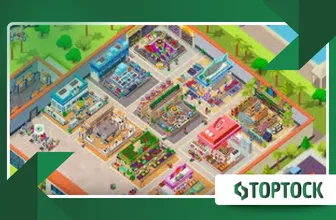
Unlocking the Perfumery or the high-end Tech wing isn’t just about variety; it’s about fundamentally changing the class of shopper entering your store.
As you scale, the “Frenzy” modes become your best friend. These spikes in activity act as a stress test for your layout, proving whether your current staffing levels can actually handle a genuine rush without the whole system grinding to a halt.
Strategic reinvestment is where most players stumble. It’s tempting to spread funds thin, but the most successful moguls understand that a single, high-performing luxury department often outweighs five mediocre produce stalls in the long run.
For those interested in the broader economic impact of these digital micro-economies, GamesIndustry.biz offers a fascinating look at how simulation mechanics reflect real-world consumer behavior.
Which Upgrades Provide the Highest Return on Investment?
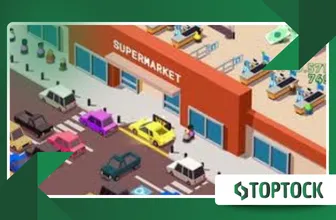
There is a subtle irony in the fact that your parking lot is often more important than your actual inventory. You can have the best store in the world, but if there’s nowhere to park, your revenue hits a hard ceiling that no amount of marketing can fix.
Once the cars are sorted, the checkout counters are your next priority. This is the ultimate bottleneck. A shopper with a full basket is a liability until they’ve actually swiped their card and cleared the lane for the next person in line.
Read more: Virtual Families 3: Raise a Digital Family with Generations of Growth
Retail Metrics: 2026 Performance Data
| Department | ROI Velocity | Management Weight | Success Factor |
| Produce | Low / Constant | Light | Volume & Speed |
| Electronics | High / Spiky | Heavy | Inventory Tech |
| Luxury | Massive | Moderate | Brand Tier |
| Car Dealer | Extreme | Complex | Prestige Level |
When Should You Move to a New City?
The “Prestige” mechanic is the game’s most ruthless psychological trick. It asks you to abandon a thriving, million-dollar business for a permanent multiplier that makes your next venture even faster. It’s a classic “reset” that feels like a gamble but is actually the only way to progress.
You’ll know it’s time to move when the progress bar barely moves after an hour of play. If the next upgrade feels like it requires a week of waiting, you’ve hit the limit of your current city’s economic potential.
++ Brain It On!: Physics-based Puzzles That Require Creative Solutions
Moving cities isn’t a retreat; it’s a strategic pivot. Each new location carries the “ghost” of your previous successes in the form of massive earning bonuses, allowing you to rebuild in minutes what originally took you days to achieve.
How to Optimize the Customer Experience?
In Idle Supermarket Tycoon, customer satisfaction is a logistical problem rather than an emotional one. A clean floor and short lines aren’t just nice to have—they are the requirements for unlocking the specific rewards that trigger massive growth.
The introduction of “Express Lanes” in recent updates has changed the early-game meta. These allow for a faster churn of low-value shoppers, keeping the main registers free for the big spenders who are actually driving your expansion.
In 2026, the game has embraced seasonal volatility. You might find your customers suddenly obsessed with a specific product, forcing you to move resources away from established departments to capitalize on a fleeting, high-profit trend before it vanishes.
Why is Data Analysis Important for Players?
If you aren’t looking at the Profit Per Second (PPS) screen, you aren’t really playing; you’re just watching colors.
The difference between a “good” store and a “great” one is the ability to spot which department is dragging down your average.
The 2026 analytics suite gives you a granular look at where your shoppers are spending their time. If people are lingering too long in the Bakery without buying anything, it’s a sign your pricing or stock levels are misaligned with your current city tier.
This data-driven approach removes the guesswork. It turns the simulation into a puzzle where every level increase is a calculated move toward total market dominance, ensuring your digital empire remains lean and highly profitable.
Final Reflections
Success here isn’t found in a single burst of activity, but in the quiet moments of optimization. It’s about building a machine that functions better without you than it ever could under constant manual control.
As you cycle through cities and watch your bank account move into the trillions, the game stops being about groceries and starts being about the beauty of a perfectly tuned system.
It’s a satisfying, if slightly addictive, reminder that in the world of retail, efficiency is king.
Mastering these layers of management is what separates the casual tappers from the true tycoons. Whether you’re optimizing a parking lot or resetting for a massive prestige bonus, the goal remains the same: keep the aisles moving and the registers ringing.
To dive deeper into the technical side of how these simulation environments are built and balanced, visit Unity Learn for a look at the architecture behind modern mobile gaming.
FAQ: Frequently Asked Questions
1. Is the Car Dealership worth the high entry cost?
Absolutely. While it’s the most expensive department to maintain, its per-transaction profit is unrivaled, making it the primary engine for late-game wealth generation and prestige resets.
2. How do offline earnings compare to active play?
With a fully upgraded management office and assigned managers, offline earnings can actually outpace active play, especially when combined with the long-term multipliers earned through city resets.
3. What happens if my “Happiness Meter” hits zero?
Shoppers will begin to leave immediately upon entering. This creates a death spiral where you lose the income needed to fix the problems causing the unhappiness in the first place.
4. Are managers permanent?
Yes, once you hire a manager for a department, they remain with that department through your current city run, automating the collection process and providing specific stat boosts.
5. How often should I use the marketing boosts?
Use them whenever you have a surplus of inventory or are about to make a major purchase. They are best utilized as a “bridge” to help you reach the next big upgrade milestone faster.
++ Idle Supermarket Tycoon: Expand Your Store and Keep Shoppers Happy
++ Idle Supermarket Tycoon Mod
Popular Now