
Hex FRVR: Une piezas hexagonales sin quedar atrapado
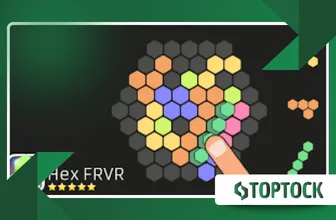
When you start playing Hex FRVR, the immediate appeal lies in its geometric simplicity, yet the strategic depth quickly reveals a sophisticated challenge for puzzle enthusiasts.
Anuncios
Unlike traditional square-based grids, this game utilizes a hexagonal board that changes everything about how spatial awareness functions during gameplay.
Resumen
- The Hexagonal Edge: Understanding the 1.2.0 version mechanics.
- Strategic Placement: How to avoid the “trap” zones.
- Scoring Systems: Maximizing multipliers through line clears.
- Comparative Analysis: Hexagons versus classic block puzzles.
- Expert Tips: Long-term survival strategies for 2026 players.
What is Hex FRVR and Why is it Addictive?
La experiencia central de Hex FRVR revolves around placing sets of three blocks onto a hexagonal grid to create continuous lines across the board.
Because hexagons have six sides, players can complete lines in three different directions, offering significantly more flexibility than standard 90-degree puzzles.
Chris Benjaminsen, the creator, designed this title to be “easy to learn but impossible to master,” a philosophy that remains true in the current gaming landscape.
Anuncios
The lack of a timer removes artificial pressure, allowing players to focus entirely on logic and spatial reasoning.
This minimalist approach ensures that Hex FRVR remains a staple in the “hyper-casual” genre while providing enough cognitive stimulation to improve mental agility and pattern recognition. It is a pure test of foresight and planning.
How Does the Hexagonal Grid Change Strategy?
In a standard block game, you primarily worry about vertical and horizontal constraints, but this title introduces a tri-axial coordinate system that requires a different mental map.
Every piece you place affects potential lines in three separate planes simultaneously.
Navigation on a hex grid means that “trapping” yourself happens much faster if you focus only on one direction.
Smart players learn to visualize the grid as a series of intersecting pathways rather than just a collection of empty cells.
By maintaining open channels in all three directions, you ensure that even the most awkward shapes can find a home.
++ Blendoku: Lógica de bloques de color que pone a prueba tu estrategia visual
This multi-directional thinking is what separates casual high-scorers from the true masters of the game.
Why Do Players Frequently Get Trapped?
The most common mistake in Hex FRVR is filling the center of the board too early without leaving gaps for larger, straight-line pieces.
When the middle becomes a solid mass of disconnected blocks, you lose the ability to clear multiple lines.
Another pitfall involves “tunnel vision,” where a player focuses exclusively on completing a single line while ignoring the accumulation of junk pieces on the periphery.
These isolated blocks eventually shrink your usable workspace until no moves remain.
Leer más: Ballz: Rebota a través de rompecabezas de bloques y rompe niveles rápidamente
According to technical analysis of puzzle logic, successful long-term play requires a “border-in” strategy. Keeping the central area relatively clear allows for the high-impact moves necessary to survive the later stages of a session.
Which Pieces Are the Most Dangerous?
The four-block straight line is arguably the most difficult piece to manage because it requires a significant amount of cleared linear space.
If your board is cluttered with “islands” of single blocks, these long pieces will quickly end your game.
Similarly, the large “V” shapes and bulky clusters can be devastating if you haven’t maintained a wide enough berth.
++ ¿Sigue siendo Roblox el rey del contenido móvil generado por el usuario en 2026?
Learning to prioritize the placement of these cumbersome shapes is a hallmark of an advanced strategy.
| Piece Type | Difficulty Rating | Best Placement Strategy |
| Single Hex | Bajo | Use to fill gaps or finish lines |
| 4-Block Line | Alto | Keep long diagonal corridors open |
| 3-Block Cluster | Medio | Place near edges to maintain center |
| Large “V” Shape | Alto | Requires open 120-degree angles |
How to Maximize Your Score in 2026
Scoring in Hex FRVR isn’t just about survival; it is about the “combo” mechanic that rewards clearing multiple lines with a single move. The point value increases exponentially when you trigger a double or triple line clear.
To achieve this, you must intentionally leave several lines “one block away” from completion. This “priming” of the board allows you to drop a single piece that clears three directions at once, catapulting your score into the millions.
Modern players often use Red Blob Games’ Hexagonal Grid Guide to understand the underlying mathematics of hex coordinates.
Applying these geometric principles can significantly improve your ability to predict where pieces will fit best.
What are the Best Patterns for Continuity?
Maintaining a “checkerboard” style spacing is often more effective than grouping all blocks together in a tight cluster.
This “loose” arrangement ensures that you always have a variety of slots available for different piece shapes.
In this game, the goal is to keep the board as “porous” as possible for as long as possible. If the board looks like a solid wall, you are likely only one or two turns away from a “Game Over” screen.
Flexibility is your greatest asset; never commit to a single corner of the board. Spread your placements evenly to ensure that no single area becomes so congested that it restricts your movement across the other axes.
When Should You Take Risks in Placement?
Risk-taking in Hex FRVR should be calculated based on the three pieces currently available in your queue. If you see a “life-saver” piece coming up, you can afford to place a risky block to set up a massive combo.
However, if your current hand consists of three large, bulky shapes, your priority must shift entirely to “damage control.”
In these moments, clearing any single line—even if it’s suboptimal—is better than trying to build for a future combo.
The most successful players treat this challenge as a game of resource management, where the “resource” is the empty space on the board. When space is high, play aggressively; when space is low, play conservatively.
Conclusión
Masterización Hex FRVR requires a balance of geometric intuition and disciplined patience. By understanding the unique properties of the hexagonal grid and avoiding the common traps of central congestion, you can push your high scores to new heights.
Remember that the game is a marathon, not a sprint; every piece placed is a seed planted for a future line clear. Stay calm, think three moves ahead, and keep those corridors open.
For more insights into the psychological benefits of spatial puzzles, check out the latest cognitive research at Psicología Hoy.
FAQ: Preguntas frecuentes
How do I restart a game of Hex FRVR?
You can usually find the restart icon in the main menu or by clicking the “refresh” arrow that appears once you have no more moves left to make.
Is there an “undo” button in the game?
Standard versions of Hex FRVR do not include an undo feature. This emphasizes the importance of deliberate placement, as every move is permanent and impacts the rest of the session.
Does the game ever actually end?
The game only ends when you can no longer fit any of the three available pieces onto the board. Theoretically, a perfect player could play a single round indefinitely.
Can I play Hex FRVR offline?
Yes, most mobile app versions of the game allow for offline play. This makes it an ideal choice for commuting or areas with limited internet connectivity.
Why are my pieces different colors?
The colors in Hex FRVR are purely aesthetic and do not affect the gameplay or scoring. They are designed to help you visually distinguish between different shapes more easily.
Popular ahora