
Disfrute de la flexibilidad de una tarjeta de crédito: sin cuota anual.
The Best Credit Card Choice for You
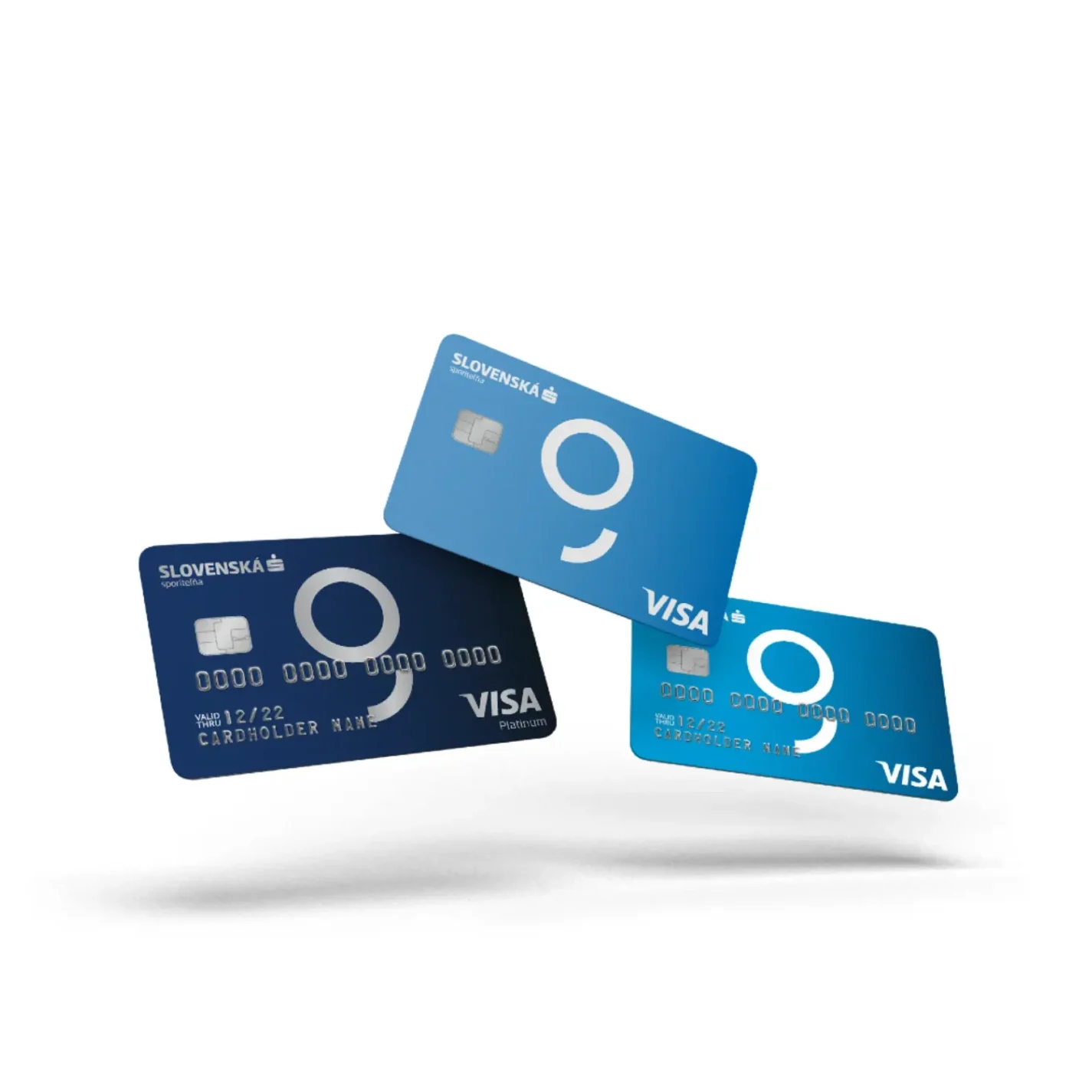
How to Choose a Credit Card in Slovakia with No Annual Fee, Flexible Payments, and Practical Financial Benefits
From online purchases and subscription payments to travel bookings, hotel reservations, car rentals, and emergency expenses, the right credit card can improve financial flexibility and reduce avoidable costs.
In some cases, it can also serve as a short-term liquidity buffer when timing between income and expenses does not align perfectly.
However, not all credit cards are structured in the same way, and the differences between them can significantly impact total cost and usability over time.
In Slovakia, consumers typically prioritize a relatively small set of core features when evaluating credit cards:
- No annual fee or clearly avoidable maintenance fees
- Transparent conditions with minimal hidden costs
- Interest-free repayment periods (when available)
- Predictable interest structure if balances are carried
- Practical digital banking tools for spending control
- Trust in established banking institutions within the EU financial system
The key is not simply obtaining a credit card or maximizing approval probability — it is selecting a product that aligns with real spending behavior, repayment discipline, and financial stability.
In this guide, you will understand how credit cards work in Slovakia, what benefits actually matter in real usage scenarios, and how to evaluate available options in a structured and practical way.
Why Credit Cards Matter in Slovakia
Although debit cards are widely used across Slovakia for everyday purchases, credit cards still serve specific financial and transactional functions that debit cards cannot fully replicate.
Typical use cases include:
- Online shopping, especially international e-commerce platforms
- Hotel bookings and travel reservations requiring card guarantees
- Car rentals, where credit cards are often mandatory for deposits
- Subscription services that require recurring billing authorization
- Emergency or unexpected expenses requiring short-term liquidity
Financial institutions evaluate creditworthiness through multiple indicators, including income stability, employment history, existing financial obligations, and past repayment behavior.
Credit scoring systems assess not only current income but also behavioral reliability over time, particularly in relation to debt management.
Responsible credit card usage — especially consistent full repayment by the due date — can support long-term financial credibility and improve access to better credit conditions in the future. Conversely, missed payments or excessive credit utilization can negatively affect financial evaluation and increase borrowing costs.
This makes education and product clarity critical before applying for any credit card product.
Is It Possible to Get a Credit Card Without Paying Annual Fees?
Yes. Several providers in Slovakia offer credit cards without annual fees, although the exact conditions often depend on usage patterns, account type, or linked banking services.
A no-annual-fee structure typically allows users to:
- Avoid fixed yearly maintenance costs
- Keep the card active over long periods without financial pressure
- Use credit selectively rather than as a constant expense tool
- Maintain flexibility in financial planning
However, “no annual fee” does not mean the card is free of cost under all circumstances.
Potential additional costs may include:
- Interest charges if the balance is not fully repaid within the interest-free period
- Cash withdrawal fees, which are often significantly higher than purchase fees
- Late payment penalties or administrative fees
- Optional insurance products linked to the card
- Foreign currency conversion fees for non-euro transactions
Understanding the full cost structure before activation is essential, as credit cards are fundamentally revolving credit instruments rather than fixed-cost products.
What Matters Most in Slovakia’s Credit Card Market
Credit card adoption in Slovakia is shaped more by financial practicality than by lifestyle rewards or aggressive cashback incentives.
Unlike some markets where rewards dominate decision-making, Slovak consumers tend to prioritize structural financial efficiency and predictable cost behavior.
The most influential decision factors are:
- No annual fee conditions or clear fee avoidance mechanisms
- Interest-free repayment period (known locally as bezúročné obdobie)
- Credit limit proportional to verified income level
- Trust and reputation of established banking institutions
- Ease of use through mobile banking and digital interfaces
Among these, the most decisive factor is typically a combination of cost transparency and fee-free usage conditions, rather than promotional benefits or short-term incentives.
What Does the Interest-Free Period Mean?
Most credit cards in Slovakia include an interest-free repayment window, typically ranging from approximately 40 to 55 days, depending on the issuer and billing cycle structure.
This mechanism allows users to:
- Make purchases without immediate interest charges
- Delay payment until the end of the billing cycle
- Use the card as a short-term liquidity tool
- Avoid financing costs when payments are managed correctly
However, this benefit is conditional. If the full outstanding balance is not repaid within the defined period, standard interest rates apply retroactively or from the end of the grace period, depending on the issuer’s policy.
As a result, disciplined repayment behavior is essential to fully benefit from this feature.
For many users, the interest-free period is more financially relevant than cashback or rewards, because it directly impacts cost avoidance rather than marginal gain.
Why Foreign Transaction Costs Matter
Some credit cards in Slovakia apply additional fees for transactions made outside the euro currency zone or in foreign currencies.
This affects several common usage scenarios:
- Travel outside the euro area (e.g., UK, US, Asia)
- Online purchases from international retailers priced in foreign currencies
- Subscription services billed in USD or GBP
- Digital services hosted outside the eurozone financial infrastructure
Even relatively small conversion fees, typically expressed as a percentage of the transaction value, can accumulate significantly over time depending on user behavior.
For example, frequent travelers or users who shop on international platforms may incur meaningful annual costs solely from currency conversion fees.
In such cases, selecting a card with reduced or zero foreign transaction fees can be financially more impactful than reward programs that return small percentages on spending.
How to Improve Your Chances of Approval
While approval criteria vary between financial institutions, several consistent factors influence credit assessment outcomes.
Stable Income
A consistent and verifiable income stream is one of the strongest positive indicators for approval. Irregular income or undocumented earnings may reduce approval probability.
Limited Recent Credit Applications
Multiple credit applications within a short timeframe may negatively affect credit evaluation systems, as it can signal financial instability or credit dependency.
Clean Financial History
Existing loans, installment agreements, or financial obligations should be managed responsibly. Late payments or defaults can significantly reduce approval chances.
Accurate Application Data
All submitted information must be consistent and accurate. Discrepancies between declared income, employment status, and financial records may lead to delays or rejection.
It is important to note that approval decisions are always based on internal risk assessment models, and no legitimate financial institution guarantees approval in advance.
How to Use a Credit Card Responsibly
Obtaining a credit card is only the initial step. Long-term financial value depends almost entirely on usage behavior rather than product selection.
Key principles of responsible usage:
- Always pay on time to avoid penalties and credit damage
- Pay the full balance whenever possible to avoid interest accumulation
- Avoid consistently high utilization of the available credit limit
- Monitor transactions regularly through mobile or online banking tools
Credit cards function optimally as payment tools when used with discipline and clear repayment planning. Without proper control, they can quickly become a source of unnecessary debt and financial pressure.
Preguntas frecuentes
Are no-annual-fee credit cards truly free?
They eliminate fixed annual maintenance costs, but interest charges, cash withdrawal fees, and other transactional costs may still apply depending on usage patterns.
Are rewards programs important in Slovakia?
Rewards exist but are generally secondary to structural benefits such as cost transparency, repayment flexibility, and bank reliability.
Does having a credit card improve financial credibility?
Responsible long-term use, including timely repayment and controlled utilization, may contribute positively to credit evaluation over time.
Is a credit card useful for occasional users?
Yes. Even infrequent users benefit from credit cards for travel bookings, online purchases, and emergency financial flexibility, provided usage remains controlled.
Conclusión
Choosing a credit card in Slovakia is not primarily about maximizing rewards or selecting promotional offers. It is fundamentally about financial structure, cost control, and alignment with real spending behavior.
The most important considerations include:
- Minimizing fixed and hidden costs
- Understanding interest-free repayment conditions
- Ensuring credit limits match actual income levels
- Maintaining financial control through digital tools and transparency
Whether the goal is simplifying online payments, managing short-term liquidity gaps, or enabling international transactions, the structural design of the card is more important than short-term promotional incentives.
Before applying, it is essential to review all terms and conditions carefully and evaluate how the product fits your real financial behavior and repayment capacity.
A well-chosen credit card does not simply provide access to credit — it functions as a controlled financial instrument that supports stability, flexibility, and long-term financial predictability when used responsibly.
Popular ahora