Kentucky Route Zero: Atmospheric Road Trip Through Surreal Landscapes
Stepping into Kentucky Route Zero requires more than just a controller; it demands a willingness to get lost in the poetic, the strange, and the deeply human cracks of a magical realist American South.
Anúncios
Summary
- Defining the Experience: Beyond the screen, a dive into narrative weight.
- The Mechanics of Mystery: How it dismantles traditional adventure tropes.
- Socio-Economic Hauntings: Debt, labor, and the ghosts of the “Zero.”
- A Decade of Craft: The long-game legacy of Cardboard Computer.
- Technical Excellence: Where stage design meets digital art.
What is Kentucky Route Zero actually about?
Strip away the labels and you’ll find Conway, an antique delivery driver pushing through his final job. He’s searching for an address that shouldn’t exist, navigating a Kentucky where gas stations feel like altars and roadside diners serve as gateways to the impossible.
The story breathes through the people Conway meets—souls weighed down by history, debt, and the quiet displacement caused by an indifferent economy. Forget pixel-hunting or convoluted puzzles. This is a point-and-click odyssey prioritizing mood and philosophical weight over mechanical friction.
You navigate the “Zero,” a subterranean highway where geography folds in on itself. It feels like a labyrinthine fever dream that is somehow both claustrophobically intimate and terrifyingly vast. The game borrows heavily from theater, framing scenes as if a stage hand is shifting the lights just out of view.
Why is the game’s art style considered revolutionary?
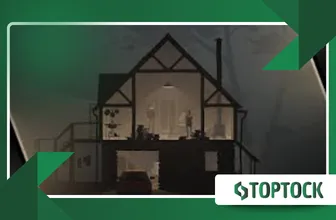
The visual identity here is a jagged, beautiful collision of mid-century stagecraft and early vector graphics. By ditching hyper-realistic textures, the developers lean into silhouettes and architectural geometry, creating a minimalist aesthetic that feels both modern and ancient.
Anúncios
There’s something unsettling about the void in these frames. It forces your brain to fill in the gaps, much like a well-written novel.
Every scene is a composed painting, using flat colors and aggressive lighting to pull your eyes toward the emotional center of a conversation.
This isn’t just “indie style” for the sake of being different; it reinforces the themes of fragility and ghostliness. It’s a masterclass in restraint, proving that a single shadow can carry more narrative weight than a million high-fidelity polygons.
++ Thimbleweed Park: Retro Point‑and‑Click Mystery in a Haunted Town
How does the dialogue system influence the story?
Most adventures let you decide what happens next, but this game lets you decide who these people are. When you pick a dialogue option, you aren’t just choosing a response; you’re choosing a character’s memory or their hidden regret.
This creates a startling sense of ownership. You might not change the destination, but you’re the one painting the interior life of the traveler. It treats the player as a co-author of a melancholic journey through the winding darkness.
By centering on internal growth rather than branching plot points, the writing maintains a rare, literary bite.
For those curious about how digital media is being redefined as high art, The Museum of Modern Art has showcased works that highlight this specific evolution in interactive storytelling.
Which themes define the experience?
There is a sharp, biting critique of late-stage capitalism buried under the magic. The game looks at how debt and corporate sprawl slowly digest local communities.
Characters are often literally or figuratively trapped by obligations to faceless entities, mirroring the real-world erosion of rural America.
Folk music and ghost stories act as the anchor here. They ground the weirdness in a cultural framework that feels lived-in and honest.
Read more: Hidden Folks: Explore Hand‑Drawn Worlds in a Search‑and‑Find Adventure
When the “Hard Times” musical sequence hits, it stops being a “game” and becomes a collective moment of grief and beauty.
Key Specifications and Milestones
| Feature | Details |
| Developer | Cardboard Computer |
| Platform Availability | PC, Console, Mobile (via Netflix) |
| Initial Release | January 2013 |
| Final Act Release | January 2020 |
| Primary Genre | Magical Realist Adventure |
| Game Engine | Unity |
What are the recurring motifs in the subterranean “Zero”?
The Zero is a liminal space—the connective tissue between the waking world and the forgotten corners of the American psyche.
To drive it, you follow absurd directions: turn around at a specific radio tower or wait for a sound that shouldn’t be there.
This turns travel into a ritual. It forces you to slow down, to actually listen to the environment instead of just rushing to a map marker. It’s a reminder that the journey isn’t a hurdle; it’s the point.
Through its five acts, we see underground cathedrals and offices run by skeletons, all presented with a jarring, calm normalcy.
++ Kick the Buddy: Relieve Stress with Explosive Arcade Fun
This mix of the mundane and the surreal creates that signature Southern Gothic tension that sticks with you long after the screen goes black.
When did it become a cultural landmark?
The episodic release schedule was a slow burn that lasted nearly a decade. This gap between acts allowed the community to linger on every detail, fostering a level of deep analysis usually reserved for cult cinema or classic literature.
By the time the “TV Edition” consolidated the experience, its status was already cemented. Critics recognized it as a rare moment where a game successfully grappled with the human condition and economic despair without feeling preachy or hollow.
Even now, developers look to this project when they want to understand how to build atmosphere. It remains a North Star for indie creators, proving that thematic resonance can be just as engaging as a traditional gameplay loop.
How does the sound design enhance the immersion?
Ben Babbitt’s score is the heartbeat of the Zero. It’s a seamless blend of ambient electronic hums, bluegrass, and gospel. The audio shifts from the low-frequency drone of a truck to ethereal synthesizers without you even noticing the transition.
Silence is wielded like a weapon. These quiet pockets allow the weight of the surreal surroundings to truly sink in. Every sound, from a cricket’s chirp to the mechanical thud of a light switch, feels tactile and deliberate.
The use of diegetic music—songs the characters are actually playing or hearing—erases the distance between you and the world. It’s an evocative, thick atmosphere that pulls you down into the subterranean dark.
The journey through the Zero isn’t about crossing a finish line. It’s about recognizing the ghosts we all carry and the quiet dignity of those trying to find their way home in a world that sold the map.
It’s a monumental achievement that proves games can speak softly and still be heard over the noise of the industry. This odyssey offers a perspective on the American landscape that is as haunting as it is necessary.
For a deeper look into the minds behind this project, the Official Cardboard Computer Site offers a glimpse into their specific creative philosophy.
FAQ
1. Is this a horror game?
Not in the traditional sense. It’s eerie and unsettling, but it relies on existential dread and atmosphere rather than jumpscares.
2. How long does it take to play?
Expect about 8 to 12 hours to see the main story and the essential interludes.
3. Are there hard puzzles?
Hardly any. The “challenge” is emotional and interpretive, not mechanical.
4. Can I play this on my phone?
Yes, if you have a Netflix subscription, the full game is available on mobile.
5. Why are the “Interludes” important?
They are short chapters that bridge the acts, offering vital world-building and some of the game’s most experimental moments.
++ Reexamining the American Road Trip in Kentucky Route Zero
Popular Now