Kick the Buddy: Relieve Stress with Explosive Arcade Fun
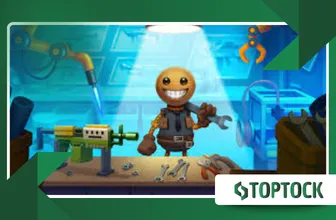
Kick the Buddy has evolved significantly since its debut, becoming a definitive staple for anyone seeking a digital vent for daily frustrations through creative destruction.
Anúncios
Summary of This Guide
- The shift toward interactive, physics-based stress relief.
- Analyzing how modern engines handle tactile feedback.
- The psychological impact of “controlled chaos” in gaming.
- Key technical upgrades observed in the 2026 landscape.
- Practical answers to common player concerns and mechanics.
What makes this title a standout in the casual arcade genre?
Since Playgendary first launched this concept, the game has effectively carved out a niche that feels less like a traditional “challenge” and more like a personal sandbox.
It provides a consequence-free environment where the primary goal isn’t to win, but to interact with a remarkably resilient ragdoll.
The 2026 updates have pushed this further by introducing sophisticated haptic responses. There is something uniquely satisfying—perhaps even a bit primal—about how the character reacts to gravity and impact, making every session feel less like a repetitive loop and more like a fresh experiment in physics.
Ultimately, its enduring popularity lies in that immediate gratification. You don’t need to master complex combos or study maps; you simply open the app and start experimenting with an increasingly absurd arsenal of tools.
Anúncios
How does the modern physics engine change the feel of play?
Current iterations of the game rely on a procedural animation system that moves away from the “canned” reactions of older mobile titles.
When you trigger an explosion, the trajectory of the Buddy isn’t predetermined; it’s calculated in real-time based on the exact point of contact and force.
This technical precision matters because it tricks the brain into feeling a sense of physical weight. When a digital object behaves exactly as your intuition expects it to, the immersion deepens, which is vital for a game designed to distract the mind from real-world stressors.
Developers have prioritized high-frame-rate fluidity to ensure that even when the screen is filled with particle effects, fire, or electricity, the movement remains buttery smooth. This prevents the mechanical “jank” that often breaks the flow of casual arcade experiences.
Which technical leaps define the current experience?
The 2026 version has integrated “Smart Environments” that turn the background into a participant in the chaos.
++ Tiles Hop: Bounce to the Beat in a Colorful Rhythm Game
Instead of a static cardboard box, players now interact with surroundings that splinter, burn, and react to the carnage happening in the center of the screen.
| Feature Category | 2026 Implementation | Impact on User Experience |
| Physics | Real-time Fluid Dynamics | Liquids and gases behave realistically |
| AI | Adaptive Reactions | The Buddy “learns” to anticipate repeat patterns |
| Visuals | Ray-Traced Lighting | Dramatic improvements in fire and metal effects |
| Social | Global Events | Community-driven destruction milestones |
Beyond the visuals, the cross-platform synchronization has become standard. Whether you are playing on a tablet during a commute or a desktop during a lunch break, your unlocked inventory and currency stay perfectly in sync without manual intervention.
As noted in recent deep dives on IGN, the shift toward these complex interactive systems has moved the title from a simple time-killer to a high-fidelity physics simulator.
Why does “digital catharsis” actually work? Kick the Buddy
There is a fascinating psychological bridge between clicking a button and feeling a release of tension. Engaging in this type of controlled, digital aggression allows the brain to process minor irritations without any real-world fallout or ethical complexity.
We often overlook how much mental energy is spent “holding it in” during a stressful day. Kick the Buddy acts as a momentary circuit breaker, shifting the cognitive load from problem-solving to sensory-driven play, which can lower cortisol levels in surprisingly short bursts.
Read more: Idle Archer: Defend Your Tower and Upgrade with Each Wave
This isn’t about promoting violence; it’s about slapstick humor. The game leans heavily into the “cartoonishness” of the situation, ensuring the vibe remains lighthearted and absurd rather than gritty or intense, which is crucial for genuine relaxation.
What is the most efficient way to progress?
If your goal is to unlock the more exotic weapons quickly, the secret lies in high-frequency hits rather than massive, slow explosions.
Tools like automatic turrets or swarm-based gadgets tend to generate gold much faster because the reward system often favors the volume of interactions.
Daily objectives shouldn’t be ignored. They frequently force you out of your comfort zone, asking you to use weapons you might otherwise overlook, and the currency rewards for these tasks are usually much higher than standard play.
Early on, it’s wise to invest in environmental hazards. These provide a sort of “passive income” during your session, allowing you to stack rewards while you experiment with the more manual, hands-on tools in your inventory.
Is the experience appropriate for younger audiences?
Despite the premise, the aesthetic is intentionally abstract. The “Buddy” is a cloth-textured ragdoll, and the effects are reminiscent of classic Saturday morning cartoons. It’s designed to be a toy box, not a combat simulator.
For those concerned about screen time or content, the “Kid Mode” simplifies the UI and filters out the more chaotic visual effects, keeping the focus on the fun physics rather than the intensity of the tools used.
The developers have also been remarkably transparent about data privacy in 2026, ensuring that the game remains a safe, offline-capable haven that doesn’t constantly mine the user for information or require a persistent, data-hungry connection.

The takeaway on digital relaxation
We live in a world that rarely offers a “pause” button, making these small pockets of digital chaos surprisingly valuable.
Kick the Buddy isn’t trying to be a complex narrative masterpiece; it’s trying to be the most satisfying digital stress ball ever created.
The brilliance of the game lies in its lack of stakes. You cannot lose, you cannot fail, and there is no ticking clock forcing you to perform. It is one of the few spaces where the player is truly in control of the pace and the outcome.
If you haven’t checked in on the game recently, the 2026 enhancements to physics and environment interaction make it worth a revisit.
For a closer look at the team behind the mechanics, you can explore the Playgendary archives to see how they’ve refined this specific brand of arcade fun.
FAQ: Frequently Asked Questions
Does the game require a constant internet connection?
No, you can engage in most of the destruction offline. An internet connection is primarily needed for updating the weapon catalog or syncing your progress across multiple devices.
What are the “Combo Bonuses”?
These occur when you use two different elements simultaneously, like fire and ice. The game rewards curiosity, so mixing different weapon types often results in a massive spike in earned currency.
How do I manage the advertisements?
While the free version is ad-supported, a single premium upgrade usually removes forced interruptions, which significantly improves the pacing and “zen” quality of the stress-relief sessions.
Is my data secure across devices?
Yes, by using standard cloud saving through your mobile OS account, your inventory and gold balance are protected, even if you delete and reinstall the app later.
Are the 2026 weapons vastly different?
The latest additions focus on “Elemental Synergy,” where weapons interact with each other—such as water conducting electricity—adding a strategic layer that wasn’t present in the earlier, simpler versions.
++ Kick the Buddy: Ultimate Stress-relief Compilation
Popular Now